As children grow and learn, they gradually develop essential motor and cognitive skills. Around the age of three, a child should begin using both sides of their body in a coordinated manner. This ability is known as crossing the midline—the developmental milestone where a child can move an arm or leg across the center of the body to perform a task. A simple example is when a child scratches their opposite elbow. Mastering this skill is critical for learning to read, write, and perform other bilateral activities effectively.
Why Crossing the Midline Matters
Crossing the midline is more than just a physical movement; it represents a child’s growing ability to build brain connections between the left and right hemispheres. It plays a foundational role in developing more complex motor and cognitive functions. Children who struggle with this skill often face challenges in reading from left to right, writing neatly, and even participating in sports. For these reasons, many families seek support through occupational therapy for children, where therapists provide structured exercises that improve midline coordination.
Creating a Dominant or “Worker” Hand
Part of healthy development involves a child choosing a dominant hand—or what’s often referred to as the “worker” hand—while the other hand supports. This process emerges naturally when a child regularly crosses the midline. For example, a child may decide to consistently use their right hand for writing and their left hand for stabilizing paper. This kind of coordinated movement is a sign of maturing brain function and is often supported through pediatric occupational therapy programs that emphasize bilateral integration.
Activities That Encourage Midline Development
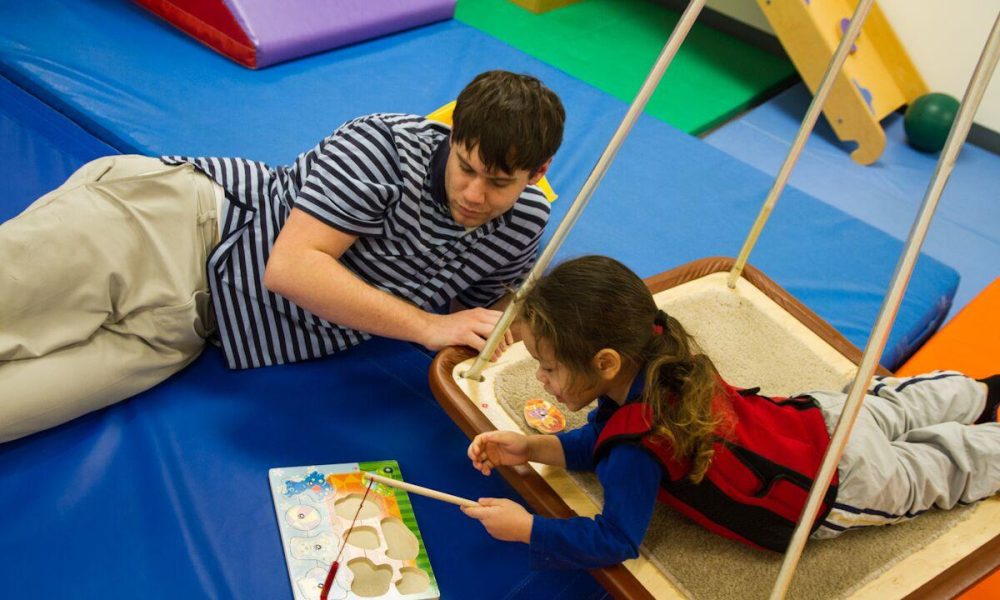
Parents can help foster this developmental milestone through fun, engaging activities such as ball games, reaching exercises, and drawing figure eights across large surfaces. These actions require the child to move limbs across their body, reinforcing neural communication between both sides of the brain. Structured play like this is often incorporated into occupational therapy services for kids, where therapists tailor activities to suit each child’s developmental stage and individual needs.
When to Seek Professional Support
If your child shows signs of avoiding or struggling with cross-body movements, it may be time to consult a professional. A skilled pediatric occupational therapist can evaluate your child’s coordination, recommend targeted exercises, and guide you on how to reinforce these movements at home. Early intervention can make a significant difference in your child’s ability to perform academic and everyday tasks confidently.
What pediatric occupational therapy can do
Pediatric occupational therapy in CT goes a long way to help your child develop the crossing midline skill. The therapy involves interaction with the child to determine his major needs and set realizable goals. In this case, pediatric occupation therapy will focus on creating pathways in the child’s brain to facilitate great coordination, which is a prerequisite for reading, writing and participating in sporting activities. When the child develops s crossing the midline skill, he can be able to read and write effectively. He can also take part in sporting activities because pathways have been created in the brain to facilitate communication between the left and right brain.