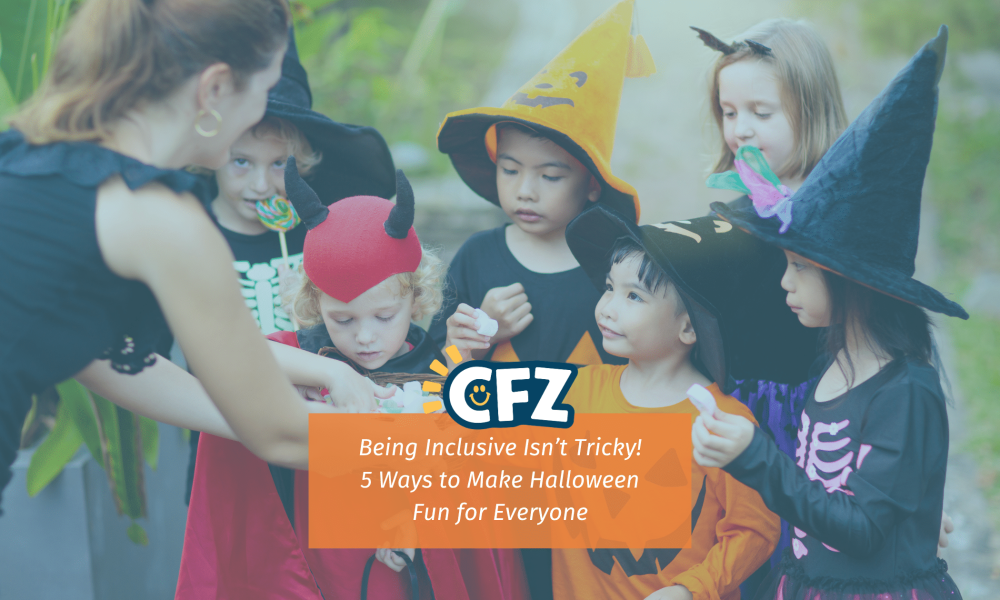
Being Inclusive Isn’t Tricky! 5 Ways to Make Halloween Fun for Everyone
Halloween is right around the corner! From picking out costumes to decorating pumpkins and going trick-or-treating, there are plenty of ways for families to enjoy the season. While Halloween is an exciting time for many children, every child experiences the holiday differently.
For some children, loud decorations, unfamiliar costumes, and crowded neighborhoods can feel overwhelming. Others may benefit from extra time, sensory-friendly options, or different ways to communicate while trick-or-treating.
The good news is that making Halloween more inclusive doesn’t require big changes. Small adjustments, patience, and awareness of different needs can go a long way in creating a welcoming experience for children of all abilities.
Here are five simple ways to make Halloween more inclusive this year!
1. Offer Alternative Treats
Candy may be a Halloween staple, but not every child can enjoy traditional treats. Food allergies, dietary restrictions, and sensory preferences may make certain candies unsuitable for some children.
Consider setting out a small bowl of non-food treats, such as bubbles, squishy toys, fidgets, or stickers, alongside traditional Halloween candy. Providing different options allows children and families to choose what works best for them and helps make trick-or-treating more inclusive.
2. Give Children Extra Time
Trick-or-treating involves several steps, from approaching an unfamiliar home to interacting with neighbors and choosing a treat. While these interactions may seem simple, some children benefit from extra time to process what’s happening and respond.
If a child takes a little longer to approach your door, choose a treat, or communicate, be patient. Avoid rushing them or making assumptions about their behavior.
Remember That Not All Disabilities Are Visible
It’s important to remember that not all disabilities are visible. A child may have needs that aren’t immediately noticeable, so offering patience and understanding to every trick-or-treater can make a difference.
Giving children the time and space they need allows them to participate at their own pace.
Make Trick-or-Treating Physically Accessible
Stairs, narrow walkways, and other obstacles can make trick-or-treating difficult for children with mobility disabilities or those who use mobility aids.
If you’re handing out treats, consider setting up a candy station at the bottom of your steps or in an accessible area with a clear pathway.
Some children may also benefit from assistance reaching treats or carrying their bags. Rather than assuming they need help, ask the child or their caregiver how you can best support their participation.
3. Remember That Communication Looks Different for Everyone
Not every child will verbally say “Trick or Treat” or “Thank You,” and that’s okay! Some children communicate through gestures, sign language, or augmentative and alternative communication (AAC).
Try Visual Supports
For families, simple visual supports can make trick-or-treating easier. Try printing a small “Trick or Treat” or “Thank You” message and attaching it to your child’s candy bucket. Children may also use picture cards or an AAC device to communicate during the experience.
For those handing out candy, remember that a verbal greeting isn’t required to receive a treat. Whether a child communicates through speech, gestures, or visual supports, every child deserves to feel included!
4. Be Mindful of Sensory Needs
Halloween is full of sights, sounds, and surprises. Flashing lights, spooky music, fog machines, and motion-activated decorations may add to the excitement, but they can also be overwhelming for children with sensory sensitivities.
If you’re welcoming trick-or-treaters, consider turning down loud music, limiting unexpected scares, or offering treats away from particularly noisy decorations.
Prepare for Sensory-Friendly Trick-or-Treating
Families can also prepare ahead of time by choosing costumes with comfortable fabrics, bringing noise-reducing headphones, or planning breaks throughout the evening.
Remember, what feels exciting to one child may feel overwhelming to another. A little preparation and flexibility can help children enjoy Halloween in a way that feels comfortable for them.
5. Let Children Celebrate Their Own Way
There’s no one-size-fits-all approach to Halloween! Some children may love dressing up and visiting every house on the block, while others may prefer celebrating at home, visiting just a few neighbors, or skipping a costume altogether.
Celebrate Without Expectations
For some children, wearing a costume, approaching unfamiliar homes, or participating in traditional trick-or-treating activities may not feel comfortable. It’s important to respect each child’s preferences without placing pressure on them to participate in a certain way.
Rather than focusing on how Halloween should look, embrace the different ways children choose to celebrate. Whether it’s visiting one house or twenty, attending a sensory-friendly event, or enjoying Halloween activities at home, the goal is for every child to have a positive experience in a way that works for them!
Small Changes Can Make a Big Difference
Halloween should be an opportunity for children to have fun, make memories, and feel part of their community. By being mindful of different needs and abilities, we can help make trick-or-treating a more welcoming experience for everyone.
Whether it’s offering alternative treats, giving a child extra time, making your home more accessible, or recognizing different ways of communicating, these small adjustments can go a long way.
At CFZ Pediatric Therapy, we believe in endless possibilities for children of all abilities. This Halloween, we encourage families and neighbors to recognize and respect those differences and help create a holiday where every child feels welcome.
Remember, being inclusive isn’t tricky. Sometimes, the smallest changes make the biggest difference!