
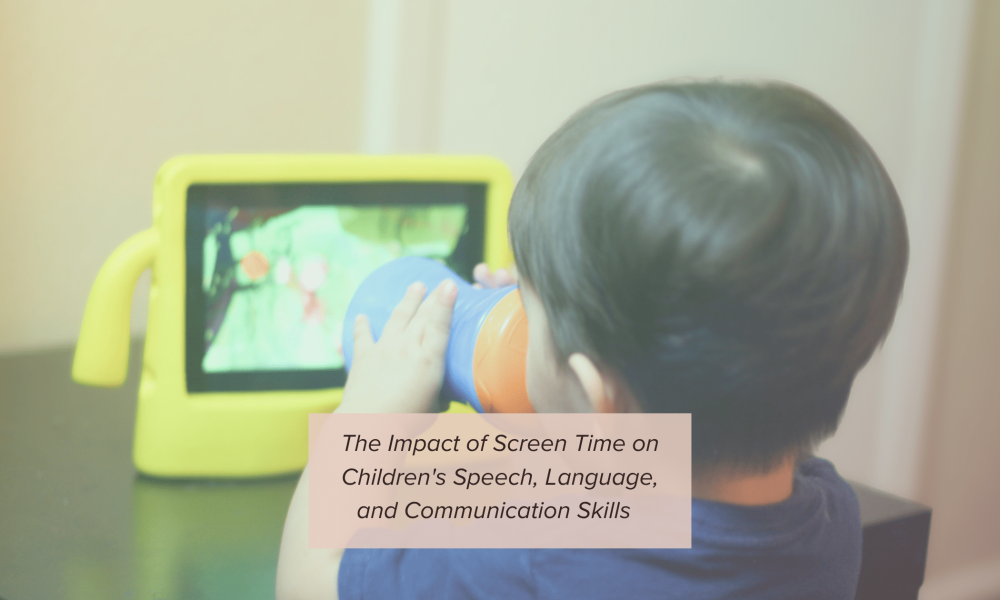
The Impact of Screen Time on Children's Speech, Language, and Communication Skills
Technology and screen time are a part of everyday life for many families. From television shows and educational videos to tablets and communication devices, technology can offer opportunities for learning, entertainment, and connection. However, finding a healthy balance is important, especially for young children whose communication and social skills are still developing.
Before discussing screen time and its potential impact on communication development, it is important to clarify that the term “screen time” in this article does not refer to aided augmentative and alternative communication (AAC). According to ASHA, aided AAC includes devices such as tablets, handheld devices, or computers that generate speech to support functional communication. These tools are designed specifically to help individuals communicate, participate in daily activities, and support learning and connection. AAC devices are separate from commercial entertainment-based screen use and can play an important role in communication development for many children.
Caitlyn Koster, Speech-Language Pathologist and AAC Lead at Cheshire Fitness Zone, shares her insight on how families can foster a more positive and intentional relationship with screen time and technology.
Why Screen Time Balance Matters
While technology can be engaging and educational, Caitlyn explains that too much screen time or early access to screens may impact communication and interaction skills.
“Oftentimes, when given access too early or for too long, screen time can impact a child’s ability or desire to communicate.”
Children learn communication best through real-life interaction with caregivers and communication partners. Even educational videos cannot fully replace the value of back-and-forth interaction and communication during everyday routines.
“When watching videos, even educational videos such as Ms. Rachel, children can miss out on real-time interactions with communication partners who can react to what they’re saying and narrate what the child is doing in real-time.”
These real-life interactions help support language development, social communication, play skills, and engagement.
How Screen Time May Impact Language Development
Research continues to explore the relationship between early screen exposure and communication development. According to ASHA, some early childhood researchers have identified links between excessive screen time in toddlerhood and later challenges related to executive functioning and language development.
Recent studies published in JAMA Pediatrics found associations between increased screen time and communication delays in young children. One study connected higher screen use in children ages 12 to 36 months with fewer vocalizations and reduced exposure to adult language throughout the day. Another study involving nearly 7,100 children found that increased screen time at age one was associated with a greater likelihood of communication and developmental delays between ages two and four.
While research on screen time continues to evolve, these findings highlight the importance of balancing technology use with real-life interaction, conversation, play, and responsive communication experiences.
Understanding High-Stimulation Content
Some television shows and videos are designed with fast dialogue, rapid scene changes, bright visuals, and constant stimulation. While these shows may keep children’s attention, they can also make it more difficult for some children to regulate attention and energy levels.
Caitlyn explains that highly stimulating shows may contribute to shorter attention spans and increased dysregulation or adverse behaviors as children begin seeking that same level of stimulation throughout the day.
If families choose to incorporate screen time, lower-stimulation shows may be a more supportive option.
Caitlyn recommends considering shows such as:
- Curious George
- Little Bear
- Daniel Tiger’s Neighborhood
- Sesame Street
“If you’re feeling overwhelmed while watching a television show with your child, imagine how they must be feeling while watching alongside you.”
Slower-paced shows with calmer visuals and fewer scene changes may help support attention while avoiding overstimulation.
Technology Can Also Support Communication
While balance is important, technology can also provide meaningful communication opportunities for children, especially those who benefit from additional communication support.
“Technology can also do amazing things for children, such as give some access to communication via high or mid-tech AAC applications.”
Large numbers of children with autism, childhood apraxia of speech, and other communication differences rely on AAC devices to support functional communication, participation, and learning. These devices are designed specifically to aid communication and are not intended for passive entertainment purposes.
For some children, augmentative and alternative communication (AAC) devices or applications can help support effective and functional communication.
If a child is not yet speaking, families can speak with their speech therapist about whether AAC may be an appropriate support for communication development.
Making Screen Time More Intentional
One way families can foster a healthier relationship with technology is by pairing screen time with real-life interaction and play.
Caitlyn encourages families to pair technology with toys, books, and everyday routines to make screen time more intentional and functional.
For example:
- If a show is discussing colors, children can play with color-matching toys while watching
- If music or videos focus on routines like hand washing or bedtime, families can incorporate them during those real-life routines
- Books or toys related to a child’s favorite show can help encourage interaction beyond the screen
These small changes can help create more opportunities for engagement, communication, and learning.
Finding a Healthy Balance
Screen time does not need to be viewed as entirely good or bad. Families can focus on creating intentional opportunities for communication, interaction, and play both on and off screens.
Children benefit most from meaningful connection, responsive interaction, and real-life experiences that support communication development.
At Cheshire Fitness Zone, our speech-language pathologists support children and families in building communication skills through individualized and engaging approaches tailored to each child’s strengths and needs.